

In order to thoroughly implement the spirit of the Academic Degrees Law of the People's Republic of China (hereinafter referred to as the "Academic Degrees Law") and solidify the legal foundation of postgraduate education, the Social Design Department recently organized a thematic training session on the Academic Degrees Law at Classroom 115, Teaching Building, Changning Campus. This training targeted all master's supervisors in the Social Design Department and was led by Tang Zhen, Deputy Director of the Social Design Department, as the keynote speaker. The session aimed to enhance the supervisors' capacity for teaching in accordance with the law through systematic interpretation and practical discussions, thereby safeguarding the cultivation of high-level artistic talent.
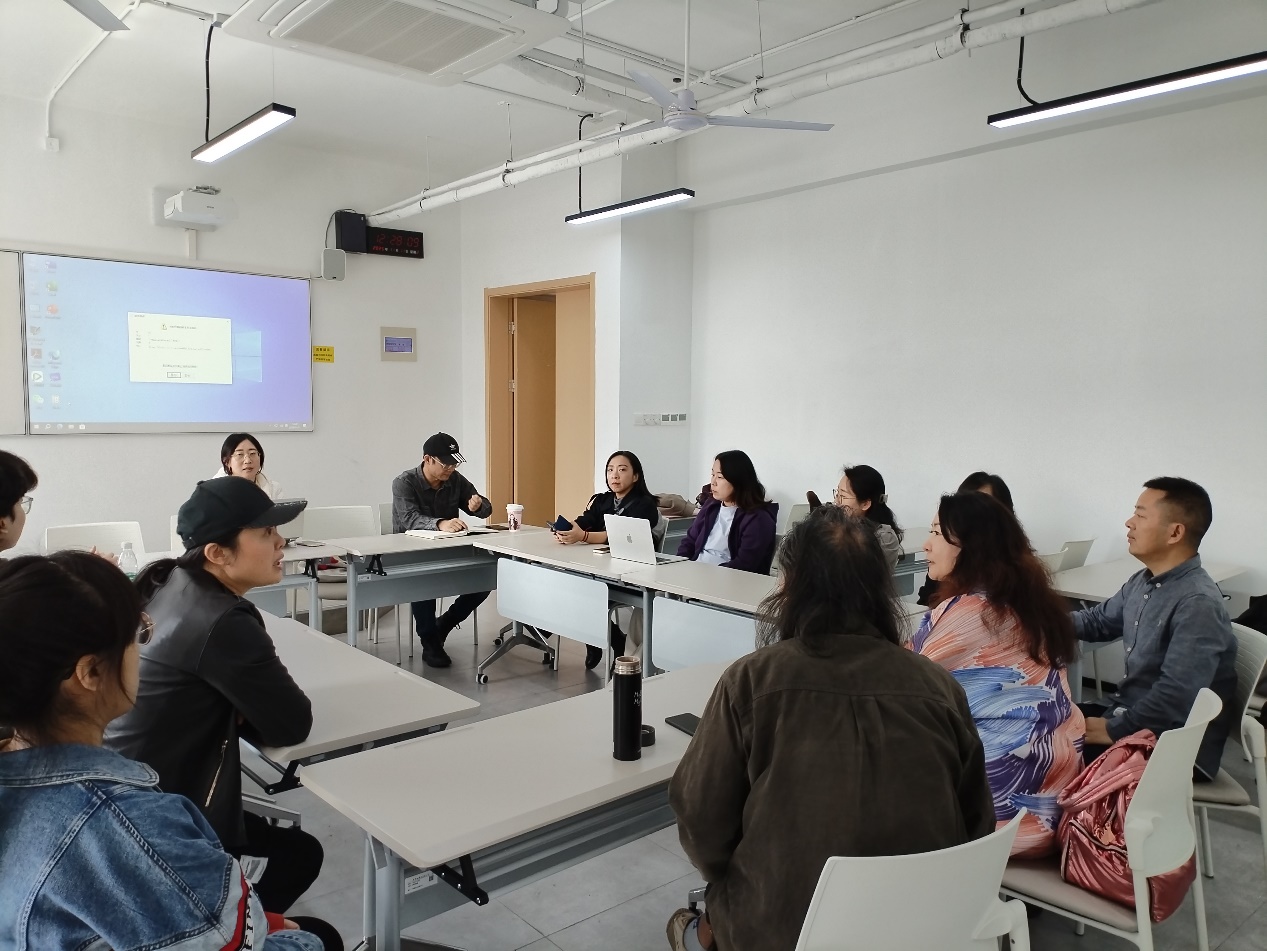
Deputy Director Tang Zhen delved into a detailed analysis based on the legislative purpose of the Academic Degrees Law, focusing on three key dimensions: "Standardization of Degree Conferral," "Normalization of Supervisor Responsibilities," and "Mechanisms for Safeguarding Student Rights." She emphasized that the new law, with its "quality-oriented" core, not only refines rigid indicators such as the originality review of dissertations and the handling of academic misconduct but also designates supervisors as全程 responsible parties for degree quality for the first time. Supervisors are required to oversee and provide signed feedback at every stage, from topic selection and proposal defense to mid-term evaluations, pre-defense, and final review. Addressing the unique characteristics of design disciplines, she stressed the need to balance creative freedom with academic standards, particularly in the evaluation of artistic works. She advocated for establishing a diversified evaluation system that respects artistic individuality while upholding academic integrity.
In light of the practical needs in fields such as Visual Communication and Environmental Design, participants unanimously agreed that only by translating legal provisions into actionable guidelines can a virtuous cycle of "knowing the law—understanding the law—applying the law" be achieved. During the session, several supervisors raised questions about how to strike a balance between encouraging experimental creativity and adhering to academic standards. Attendees expressed that the training combined policy depth with practical relevance, particularly appreciating the operational guidance on newly added clauses such as the "Academic Integrity Commitment" and "Appeals and Review Procedures." Cao Ruping, Director of the Social Design Department, concluded, "The Academic Degrees Law is both a 'disciplinary mechanism' and a 'safeguard.' We must seize this opportunity to integrate the rule of law into key areas such as curriculum ideology and the reform of the studio system."
With the deepening implementation of the university's "Three Rotor Wings" concept, the Social Design Department will leverage the enforcement of the Academic Degrees Law to further reinforce the primary responsibility of supervisors. The department is committed to cultivating interdisciplinary design talents who possess a sense of national pride, global vision, and integrative capabilities, thereby contributing wisdom and strength to the national strategy of building a culturally strong China.