
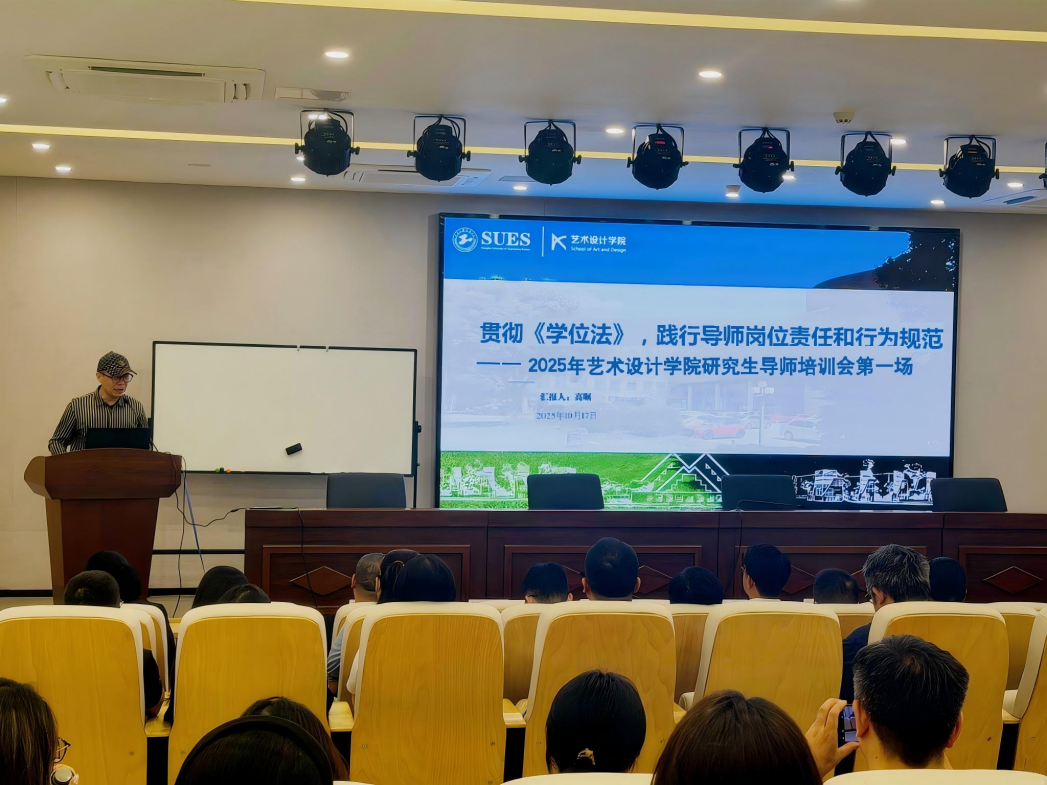
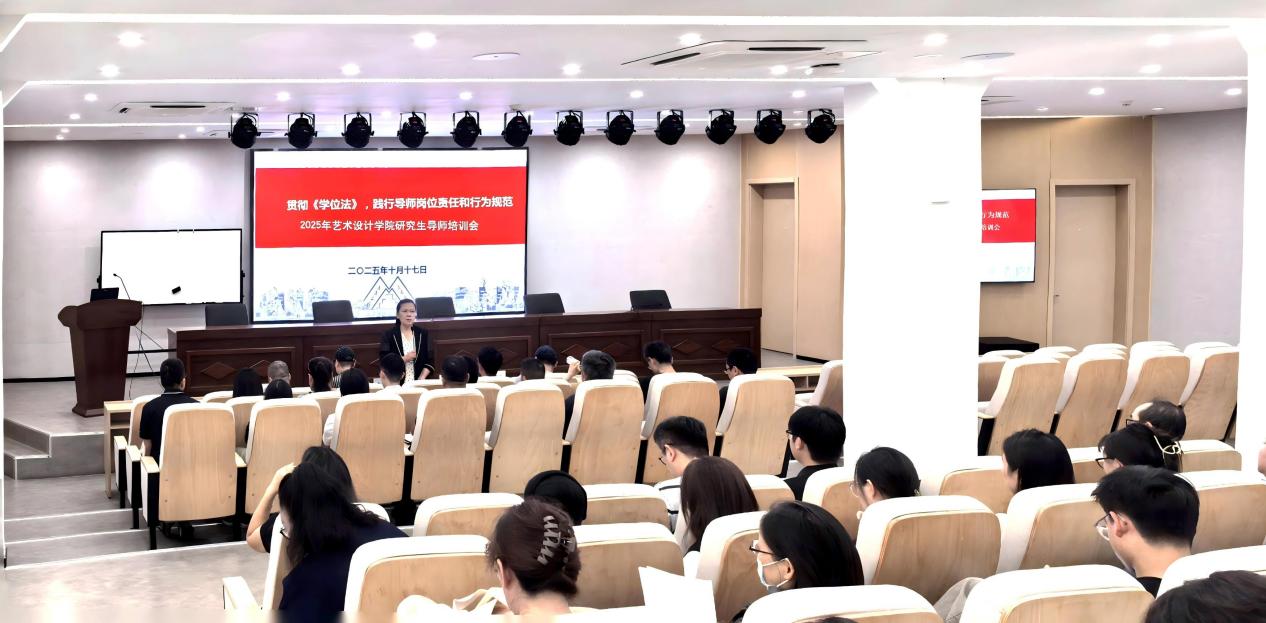
To thoroughly implement the spirit of the new "Degree Law" and practice the university's new "Engineering-Management-Design" Three-Rotor interdisciplinary talent cultivation model, the School of Art and Design successfully held the first graduate supervisor team building training session on October 17, 2025, in Meeting Room 103 of the teaching building at the Changning Campus. School Party Committee Secretary Li Yunxian, Dean Gao Zhu, Vice Dean Xu Jianghua, and all graduate supervisors attended the meeting, engaging in in-depth discussions around supervisor responsibilities and the reform of the graduate cultivation system.
Dean Gao Zhu emphasized at the meeting that in response to the challenges and opportunities of the new era, the School will vigorously innovate the "Three-Rotor" talent cultivation model. This involves constructing a new paradigm for high-quality graduate cultivation through the integration of the three wings: Engineering, Management, and Design. By strengthening industry-university-research project collaboration as a link and establishing interdisciplinary design research institutes, the School actively aims to create a new model for cultivating application-oriented innovative talents that integrates engineering ethics, design thinking, and management concepts.
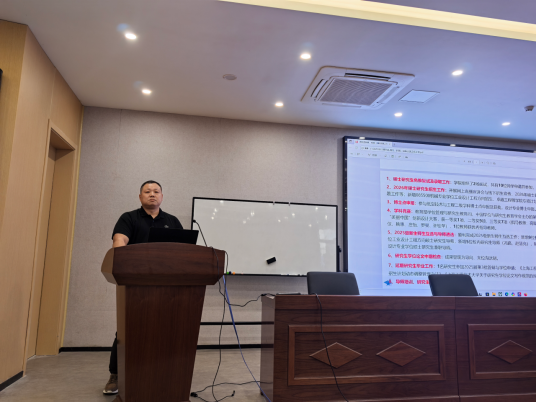
In her thematic speech, Vice Dean Xu Jianghua stressed that within the "Three-Rotor" framework, the cultivation of academic masters and professional masters should have distinct emphases: academic degrees focus on theoretical innovation and enhancing research capabilities, while professional degrees emphasize project practice and cross-boundary integration skills. She required supervisors to continuously improve their own interdisciplinary supervision capabilities and strictly control the quality of theses and creative works to ensure the effective implementation of the "Three-Rotor" model.
Starting from the fundamental task of "Fostering Virtue through Education," Secretary Li Yunxian emphasized that supervisors should build healthy supervisor-student relationships through "strict management and profound care," integrate value guidance throughout the entire "Engineering-Management-Design" chain of the cultivation process, pay attention to students' holistic development, and solidify the ideological foundation of talent cultivation.
To further advance the reforms, the meeting proposed three work requirements: First, build consensus and strengthen collaboration among industry, university, and government to form a synergistic force for education. Second, conduct in-depth research, extensively solicit opinions from faculty and students, and enhance the scientific nature of the reforms. Third, refine pilot programs, encourage exploration, and stimulate grassroots reform vitality.
This training session marks the School of Art and Design's entry into a new phase of systematic reform led by the "Three-Rotor" model in graduate education. Attending supervisors unanimously expressed their commitment to actively engaging in innovative practices for talent cultivation, jointly building a "jungle ecosystem" of interdisciplinary integration and development, and contributing to the university's goal of becoming a world-class application-oriented innovative university.