

On October 13, 2025, Li Yunpeng, the instructor of the "Computer-Aided Design" course, invited designer Ding Jianpo to conduct a thematic sharing session titled "From Blueprint to Reality: The Design of Taiyuan Zoo." This lecture aimed to build a bridge for dialogue with frontline industry experts. During the 90-minute session, Mr. Ding used the real-world project of the Taiyuan Zoo design as a case study, providing a vivid and detailed analysis of the complete process through which a design project progresses from the initial conceptual blueprint to finally becoming a tangible reality.
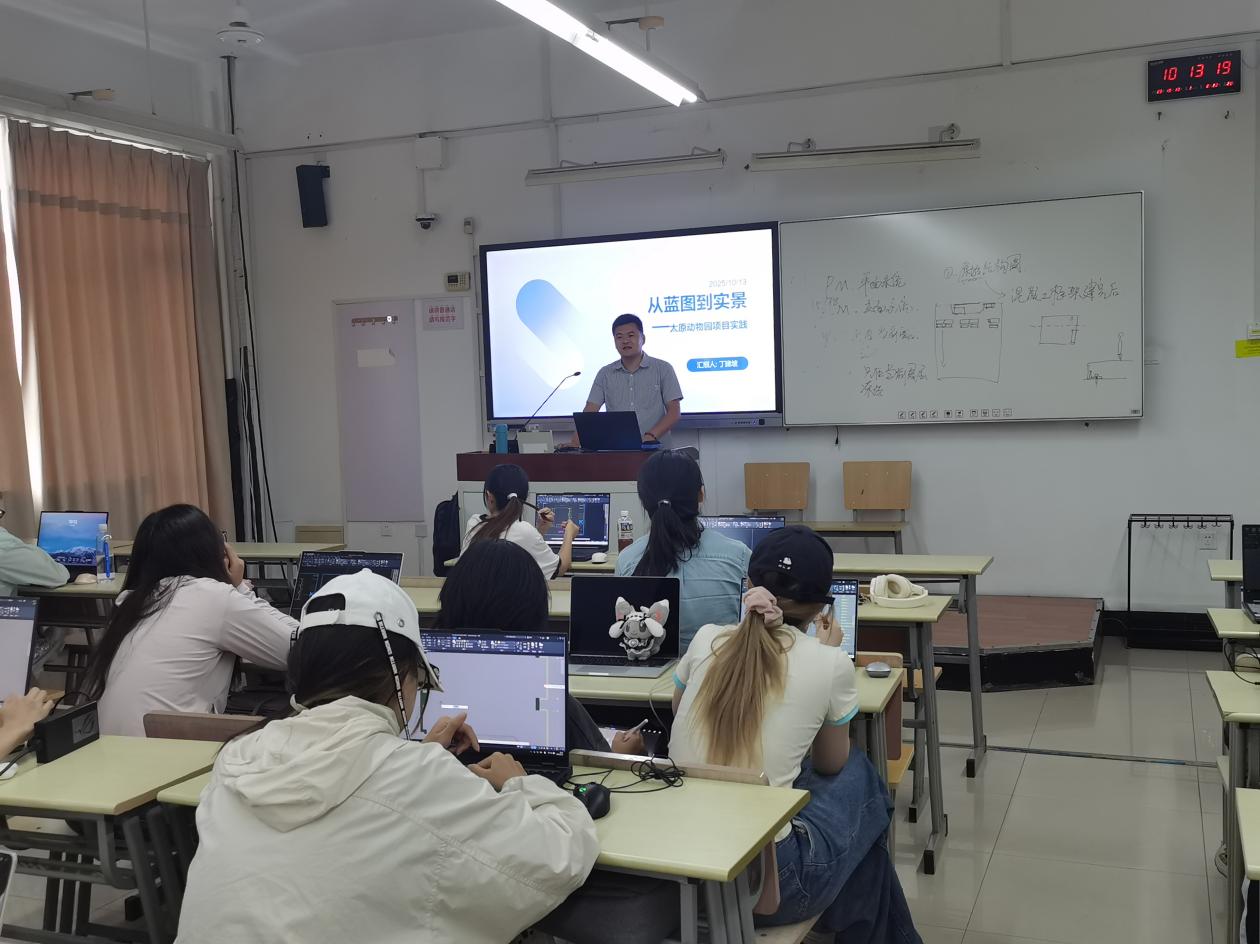
Mr. Ding began by explaining the conceptualization and schematic design phase at the project's outset, describing how abstract requirements and ideas are translated into concrete design schemes and floor plans. He then moved into the crucial "construction document design" stage. Drawing on his extensive experience with CAD drawing production, Mr. Ding shared numerous practical insights and techniques, emphasizing how the standardization, accuracy, and constructability of drawings form the foundation for ensuring smooth project realization. The lecture content was well-structured and logically clear. Through screen sharing, he displayed key CAD drawings, allowing students to visually grasp the profound meaning behind "a minute error can lead to a massive deviation."
Finally, the lecture extended to the construction coordination and project realization phase. By comparing on-site photos with design drawings, Mr. Ding explained how to communicate effectively with construction teams, resolve unexpected on-site issues, and ensure the design intent is achieved to the greatest extent possible. He particularly emphasized that an excellent designer must not only know how to "draw" but also understand how to "get things built," a perspective that prompted deep reflection among the attending students.
The entire lecture was substantial in content and illustrated with lively examples, covering both the macro process overview and micro-level technical guidance, demystifying the practical operations within the design industry for the students. During the Q&A session, students actively asked questions regarding their academic studies, software skills, career development, and other concerns, to which the speaker provided patient and detailed answers. This lecture provided students with a more systematic and profound understanding of the entire design workflow, allowing them not only to acquire valuable practical experience but also to gain clearer direction for their own professional studies and future career planning.